
Showing posts with label AI. Show all posts
Showing posts with label AI. Show all posts
Wednesday, September 23, 2026


Saturday, May 30, 2026

Wednesday, April 8, 2026

Monday, September 4, 2023

Tuesday, April 18, 2023


Tuesday, March 7, 2023
Is ChatGPT Friend or Foe?
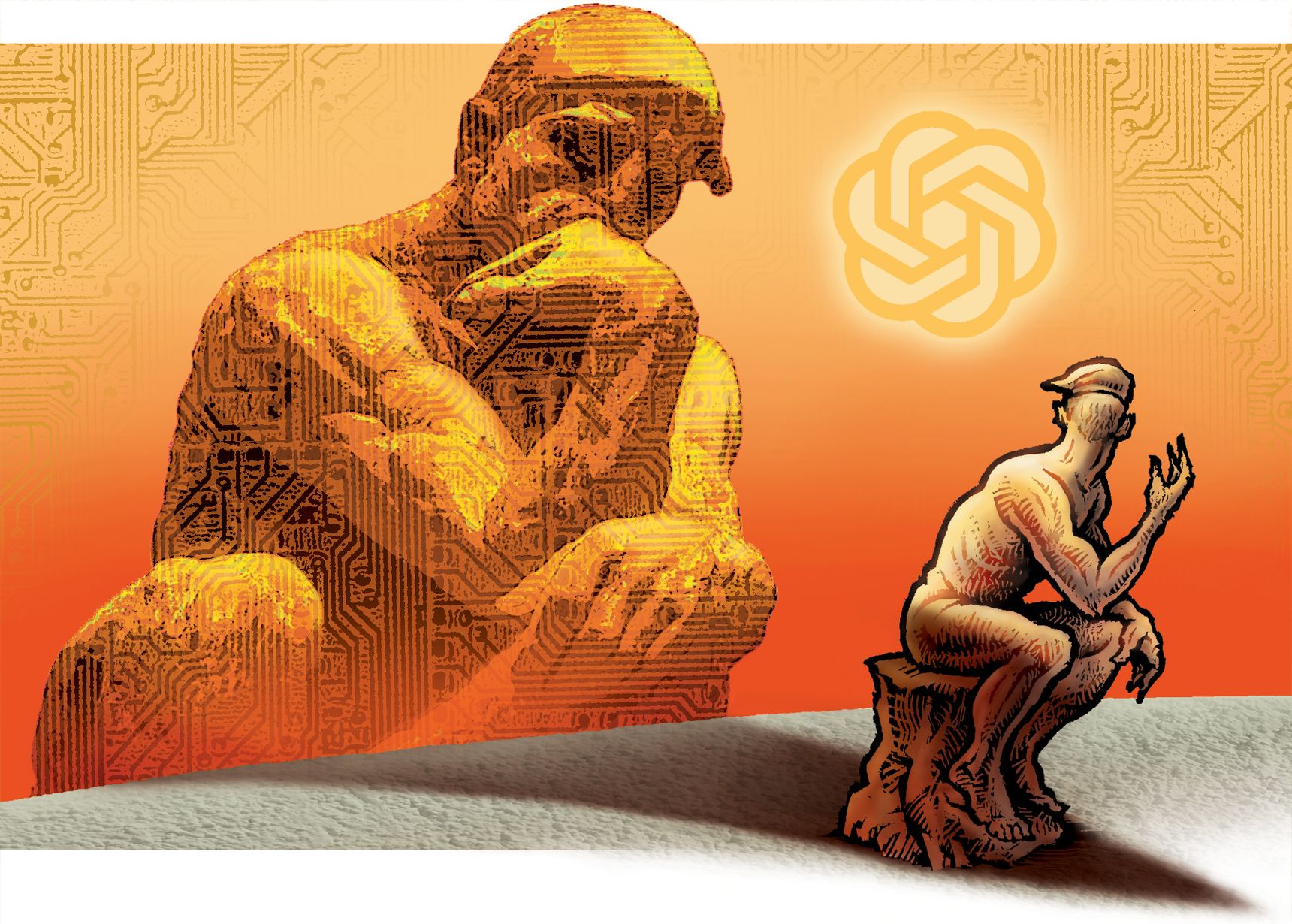
Equal parts questions and answers, the trio endeavor to explain what ChatGPT's (Generative Pre-Trained Transformer) technology is and how it works, while examining the much larger issues of its potential to influence if not determine how we learn, think, and act.
Selected excerpts:
"Sophisticated AI methods produce results without explaining why or how their process works. The GPT computer is prompted by a query from a human. The learning machine answers in literate text within seconds. It is able to do so because it has pregenerated representations of the vast data on which it was trained. Because the process by which it created those representations was developed by machine learning that reflects patterns and connections across vast amounts of text, the precise sources and reasons for any one representation's particular features remain unknown. By what process the learning machine stores its knowledge, distills it, and retrieves it is similarly unknown. Whether the process will ever be discovered, the mystery associated with machine learning will challenge human cognition for the indefinite future."
"What happens if this technology cannot be completely controlled? What if there will always be ways to generate falsehoods, false pictures, and fake videos, and people will never learn to disbelieve what they see and hear? Humans are taught from birth to believe what they see and hear, and that may well no longer be true as a result of generative AI. Even if the big platforms, by custom and regulation, work hard to mark and sort bad content, we know that content once seen cannot be unseen. The ability to manage and control globally distributed content fully is a serious and unsolved problem."
I've asked ChatGPT a number of questions, some already well-understood and others a matter of uncertainty and debate. This Q&A below suggests the limitations and risks of automation bias.

Sunday, April 15, 2018
HAL 9000, Siri & Alexa

It's been 50 years since the release of Stanley Kubrick's groundbreaking 2001: A Space Odyssey. Few films, especially science fiction movies, have held up so well.
The New York Times reported recently the backstory about the voice of the HAL 9000 computer.
"The story of the creation of HAL's performance –– the result of a last-minute collaboration between the idiosyncratic director Stanley Kubrick and the veteran Canadian actor Douglas Rain –– has been somewhat lost in the 50 years since the film's release in April 1968. As has its impact: Artificial intelligence has borrowed from the HAL persona, and now, unwittingly, a light hint of Canadianness resides in our phones and interactive devices."Actor Martin Balsam, Kubrick's fellow Bronx native, was originally cast and recorded as the voice of the HAL 9000 and it was only near the end of production that Kubrick decided a less "colloquially American voice" was needed.
"Kubrick had heard Mr. Rain's voice in the 1960 documentary 'Universe,' a film he watched at least 95 times. 'I think he's perfect,' Kubrick wrote to a colleague in a letter preserved in the director's archive. 'The voice is neither patronizing, nor is it intimidating, nor is it pompous, overly dramatic or actorish. Despite this, it is interesting.'And that is why we now dutifully talk and respond to our discursive AI overlords like Siri and Alexa.
Subscribe to:
Posts (Atom)